In shortMachu Picchu is an Inca stone citadel built on a ridge in Peru's Cusco Region, inside the Historic Sanctuary of Machu Picchu, 32,592 hectares protected since 8 January 1981. Yale's exhibition curators attribute it to the Inca ruler Pachacuti and date it to 1450. The citadel stands at 2,340 m, and every visit now runs on a timed ticket and a numbered route.
32,592 haprotected sanctuary area
2,340 maltitude of the citadel
340orchid species recorded
10 routesacross three circuits
What is Machu Picchu, in plain terms
Machu Picchu is a stone-built Inca settlement on a high ridge in the Cusco Region of Peru: terraces cut into the slope, plazas, houses, temples and water channels, laid out between two peaks above the Urubamba river. It stands at 2,340 m according to Peru's state news agency, and it sits inside a protected natural area, so what you walk through is an archaeological site and a nature reserve at the same time.
Yale's exhibition curators attribute the place to the Inca ruler Pachacuti and date the building to 1450. Research by Burger and Salazar put its working life at under a hundred years, against Hiram Bingham's claim of centuries of occupation. The interpretation that holds today is a seasonal residence for the Inca elite of Cuzco, which the Yale curator Richard Burger compared to a presidential retreat.
Visitors often expect thin air at the site itself. Cusco is the high place at 3,399 m; the citadel is roughly a kilometre lower, and the road and rail route between them tops out at 2,792 m. Settle into Cusco first, then go down to the ruins once your breathing has evened out.
The sanctuary that surrounds the ruins
Peru declared 32,592 hectares around the citadel an intangible area in 1981, creating the Historic Sanctuary by Supreme Decree 001-81-AA on 8 January and classifying it as a conservation unit to guarantee its intangibility and rational use. In January 2026 the sanctuary marked its 45th anniversary as a protected area.
Two mountain ranges cross it, the Urubamba and the Vilcabamba, and the vertical spread inside those boundaries is the reason the vegetation changes every few hundred metres of descent. About 340 orchid species have been recorded here, roughly 20% of all the orchid species identified in Peru.
- Snow peaks above 6,000 m at the high end of the sanctuary
- Warm Urubamba river bottom below 2,000 m at the low end
- Urubamba and Vilcabamba ranges crossing the protected area
- About 340 orchid species logged, around a fifth of Peru's total
Why is Machu Picchu important
Two outside judgements set out the site's standing. The World Heritage inscription dates from 9 December 1983 and rests on criteria I, III and VII, the first of which reads the place as a masterpiece of Inca art, urbanism, architecture and engineering. The label most visitors have heard of came separately, from a worldwide ballot of more than 100 million votes that named Machu Picchu among the New Seven Wonders of the World.
The engineering claim is not decorative. The citadel sits between two geological faults, and Inca builders gave it an earthquake-resistant design on ground that moves. That is the kind of detail a licensed guide will point out in walls you would otherwise walk past.
Its modern story begins in 1911, when Hiram Bingham III, a Yale professor and archaeologist, reached the site and brought it to international attention. Artefacts recovered by his expeditions filled a Yale Peabody exhibition in 2003 of more than 400 pieces in gold, silver, ceramic, bone and textile.
What you actually see on the ridge
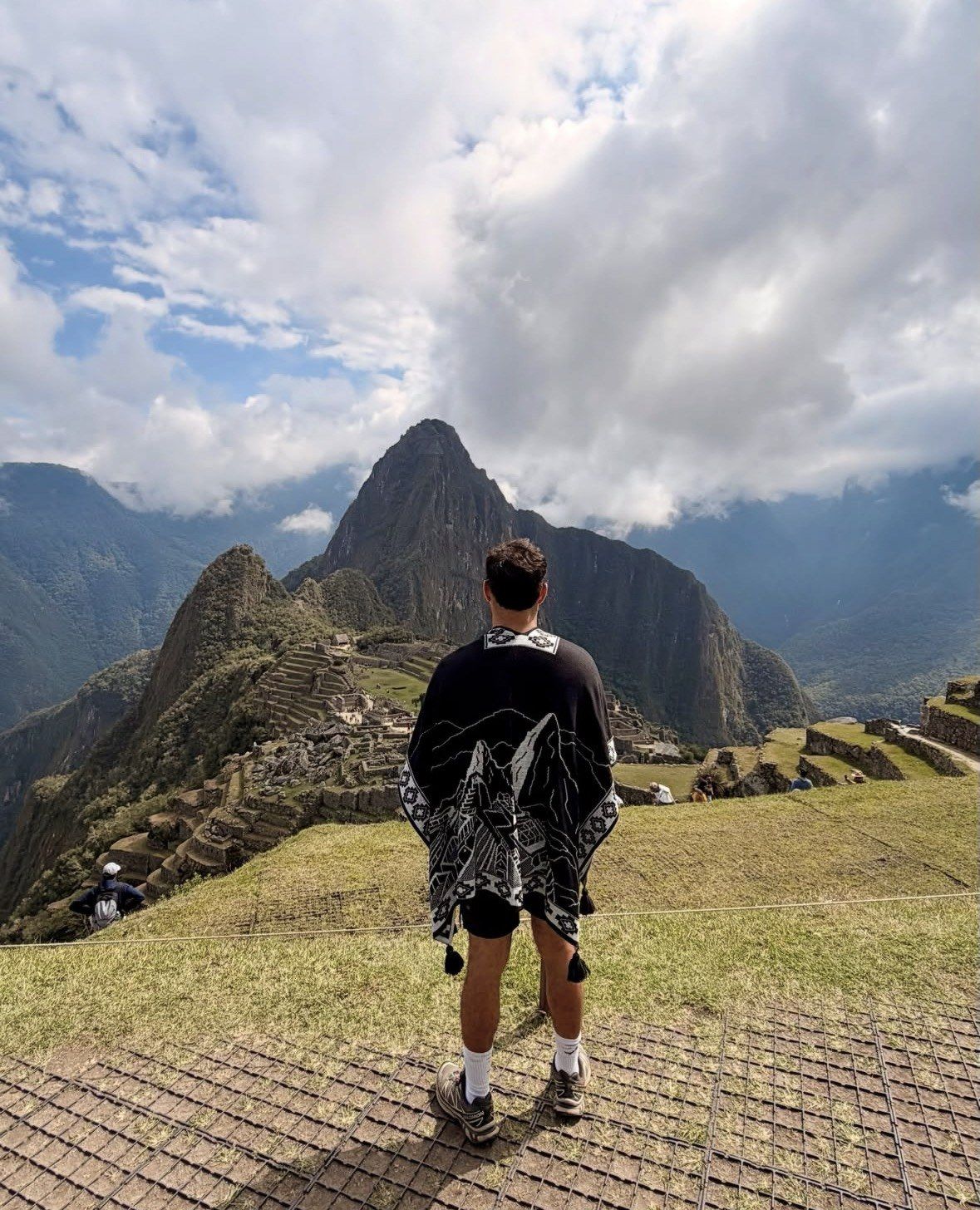
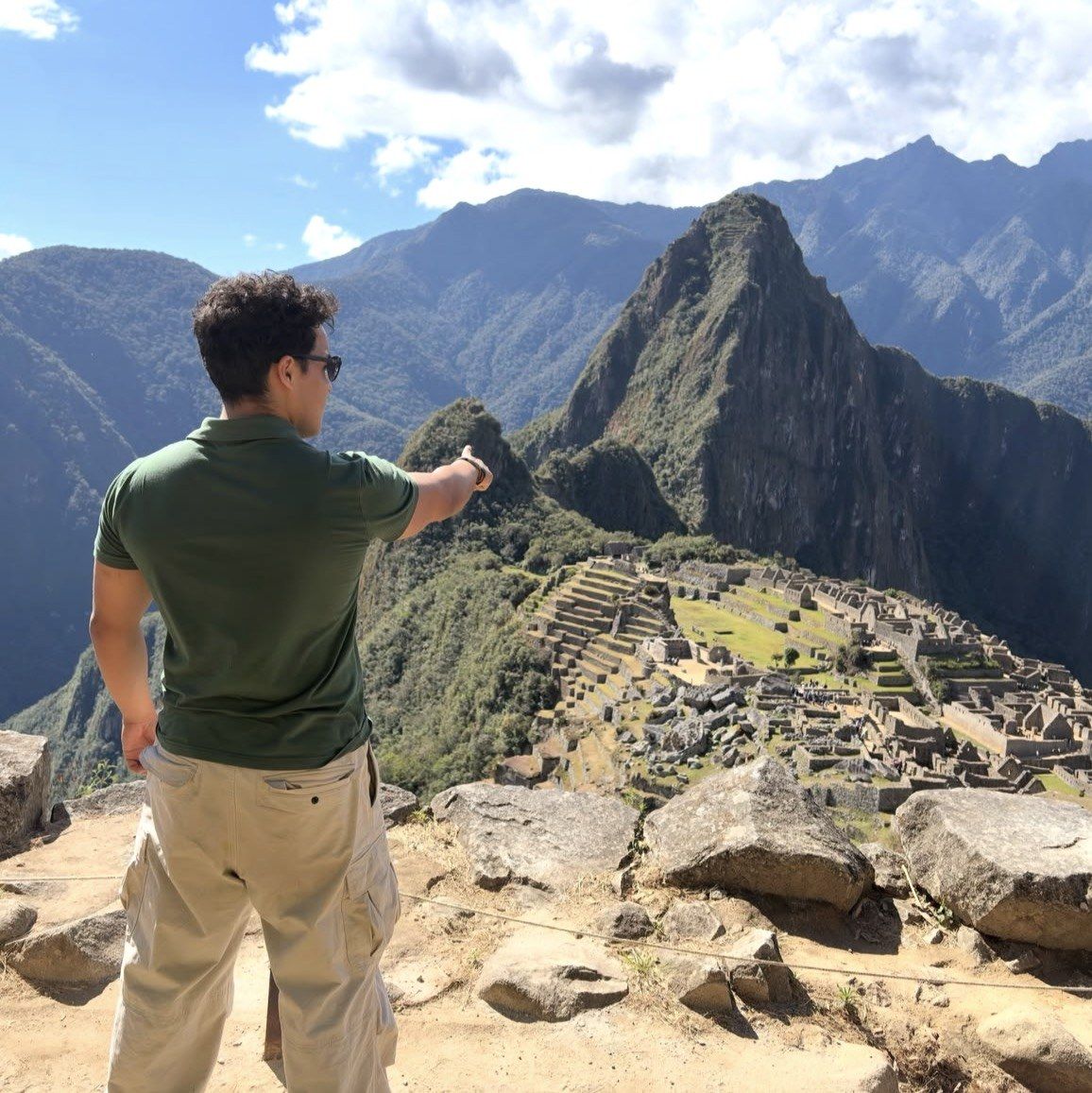
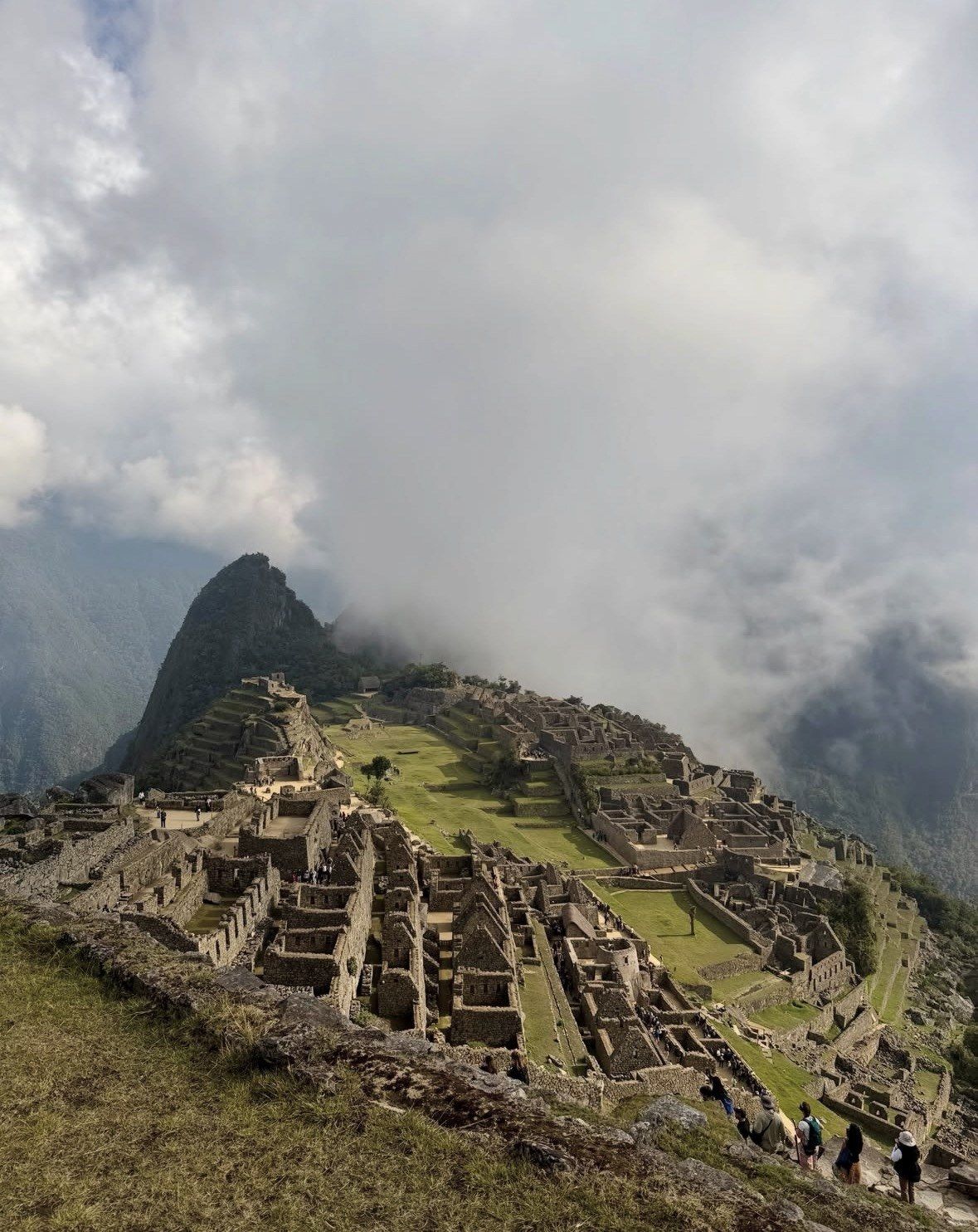
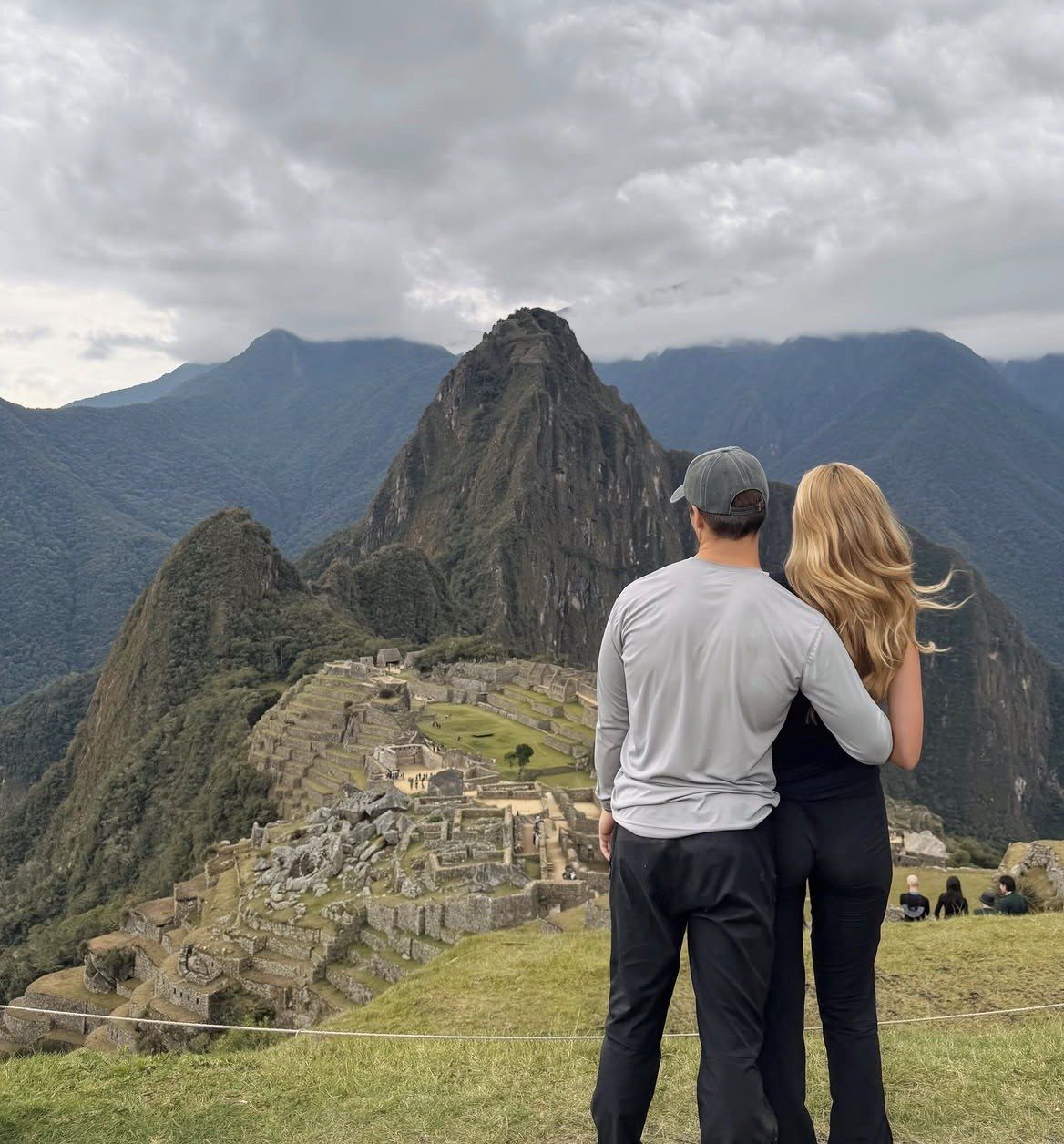
You see an urban core of houses, temples and plazas, the farming terraces that hold the slope together, and the classic viewpoint looking down the ridge with a peak behind it. That peak is Huayna Picchu, 2,720 m, used by the Inca as a lookout. A smaller third summit, Huchuy Picchu at 2,497 m, takes about an hour to climb and is reached on route 3-D.
Where you walk is decided when you buy. Visits are organised into three circuits subdivided into ten routes, and the route printed on your ticket is the one you follow. Book Route 2-A if you want the fullest version of the classic walk, with up to 2 hours 30 minutes inside the site covering the urban zone and the postcard view; take 2-B if 2-A has gone. Circuit 1 gives no access to the urban zone at all, which is the single most common booking mistake.
Mountain routes are a different day out. Machu Picchu Mountain on route 1-A runs about 4 hours round trip plus up to an hour in the site, Huayna Picchu on 3-A about an hour in the site plus up to three hours climbing, and Gran Caverna on 3-C about an hour plus up to four. Routes 1-A, 1-D, 3-C and 3-D are for visitors over 18, and some of them disappear from the calendar for months at a time, so check your dates before you set your heart on a climb.
| Circuit | Routes | Reference walking time |
|---|
| Circuit 2 Clásico | 2-A, 2-B | 2 hours 30 minutes |
|---|
| Circuit 1 Panorámico | 1-A to 1-D | About 3 hours |
|---|
| Circuit 3 Realeza | 3-A to 3-D | About 2 hours |
|---|
How a 2026 visit is organised
Entry is timed. Tickets are sold in bands, morning 06:00 to 12:00, afternoon 12:00 to 18:00 or full day 06:00 to 18:00, and you go in at the exact hour printed on the ticket. Arriving late is tolerated for 30 minutes in low season and 45 in high season, after which the gate turns you away.
Numbers are capped daily: 5,600 visitors in high season and 4,500 on all other 2026 dates. That daily total is split before it reaches you, with 3,500 places in the online pool in regular season and 4,600 in high season, while another 1,000 are kept back each day for a counter in Aguas Calientes.
The buying mechanics changed in September 2026, when Ministerial Resolutions 333 and 334-2026-MC, signed on the 11th of that month, took prior reservations out of the system. Choosing a slot no longer holds it and payment must go through within 15 minutes or it returns to sale, and a 30-day trial that began 22 September 2026 allows the Ministry to lengthen or shorten that window. Every ticket carries the holder's full name and ID document number, names cannot be changed afterwards, and the lawful channels are the official portal, an authorised counter, or an agency registered with the Ministry of Culture's Cusco office.
- The 2026 high-season calendar runs on 1 January, from 2 to 5 April, from 19 June to 2 November, and on the last two days of December
- Cap of 4,500 on all other dates, and from 3 November 2026
- Routes 1-B, 1-D, 3-A and 3-C stay closed between 16 October and 29 December
- High-season sales only on 1-C, 3-C and 3-D
- Passport or ID details on the ticket must match the document you present at the gate
Two days, with a night below the gate
This is the format for the reader who wants an early entry hour instead of a 15-hour day: Circuit 2 priority subject to Ministry availability, a private room in Aguas Calientes and a local guide for both the Sacred Valley and the citadel, from $449.
★ 4.8/5 · 1,294 reviews
One day, two days, or arriving on foot
A packaged day from Cusco is a long one. On the operator's own schedule it begins with a 05:20 pickup, counts about two hours of van travel to Ollantaytambo, boards the 08:29 train for a 09:54 arrival, puts your entry hour somewhere between 11:00 and 14:00, and returns you to the hotel near 20:40, roughly 15 hours after you left. Book it if you genuinely have one spare day and no flexibility.
Sleeping in Aguas Calientes is the better move if your calendar allows it. From a bed in town you can be on the 5:30 a.m. first shuttle and inside the gate at an early printed hour, on a road of 8 km and roughly 13 hairpin bends that takes 20 to 25 minutes, and it lets you buy the bus ticket the afternoon before at the Consettur booth on Avenida Hermanos Ayar rather than in the morning queue.
Arriving on foot is a separate commitment. Everyone who reaches the citadel on the Inca Trail network enters on Route 3-B under a reserved daily quota booked and paid through an authorised agency, trail arrivals do not pay the SERNANP conservation amount, the network closes every February for rain-season maintenance, and 2026 permits were released month by month between 27 October and 4 November 2025 at 9:00 a.m. local time.
Three formats on this site match those three decisions. The Machu Picchu Tour Full Day by Train runs 16 hours from $419, rated 5.0 ★ (321 reviews), with expedition train both ways, the shuttle up and down, expert guides, pickup and drop-off, entry ticket and circuit subject to availability, and a full refund if you cancel at least 24 hours before departure. The 2-Day Sacred Valley & Machu Picchu Tour from Cusco by Train, 2 days from $449 and rated 4.8 ★ (1294 reviews), includes priority allocation for Circuit 2 subject to Ministry availability, a private room in Aguas Calientes and an English-speaking local guide. For walkers, the Inca Trail 4-Day Trek to Machu Picchu with return by Vistadome train runs 4 days from $835, rated 5.0 ★ (11551 reviews), with a personal porter up to 7 kg, all meals, camping, the entrance fee and the train on the final day.
Questions people ask
Where exactly is Machu Picchu in Peru?
In the Cusco Region of southern Peru, inside the Historic Sanctuary of Machu Picchu. The usual routing is Lima to Cusco by air in about 1 hour 15 minutes, Cusco to Ollantaytambo by road in about 1 hour 30 minutes, then Ollantaytambo to Machupicchu by train in roughly 1 hour 30 minutes to 2 hours. The town below the ruins is Aguas Calientes, 8 km from the gate by the shuttle road.
Was Machu Picchu a lost city?
Not in the sense the phrase suggests. Yale's reading is a royal estate for the Inca elite of Cuzco, built under Pachacuti in 1450, with Burger and Salazar finding it active for less than a hundred years rather than the centuries Bingham assumed. It was known locally and never forgotten; Bingham's 1911 visit is what brought it to the attention of the outside world.
Is a guide compulsory inside the citadel?
Peru's Ministry of Culture recommends hiring a guide but does not require one. The visit regulation caps guided groups at sixteen visitors, requires the guide to stay with the group throughout and to display a valid guide card, and requires a flag or banner once a group reaches five people. Visitors cannot be moved between groups, and a group registered at the entrance cannot be enlarged once inside.
What do you pay besides the entrance ticket?
Beyond the Ministry of Culture ticket there is a conservation amount collected by SERNANP for the sanctuary, in force since 1 May 2026: a foreign adult over 18 pays S/11 and a foreign child aged 3 to 17 pays S/5. Visitors who arrive on foot via the Inca Trail network do not pay it. The shuttle between Aguas Calientes and the gate is a regulated fare of about US$24 round trip for foreign visitors, and the Cusco Tourist Ticket for Sacred Valley sites is separate again.
How long can you stay inside Machu Picchu?
Four hours is the ceiling written into the visit regulation, which admits visitors between 06:00 and 16:00 and closes the register at 17:30. Re-entry is not allowed except in cases of force majeure. Anyone who breaches the rules is removed immediately and forfeits the price of the ticket with no refund, so treat the printed hour and your route as fixed.
Read also