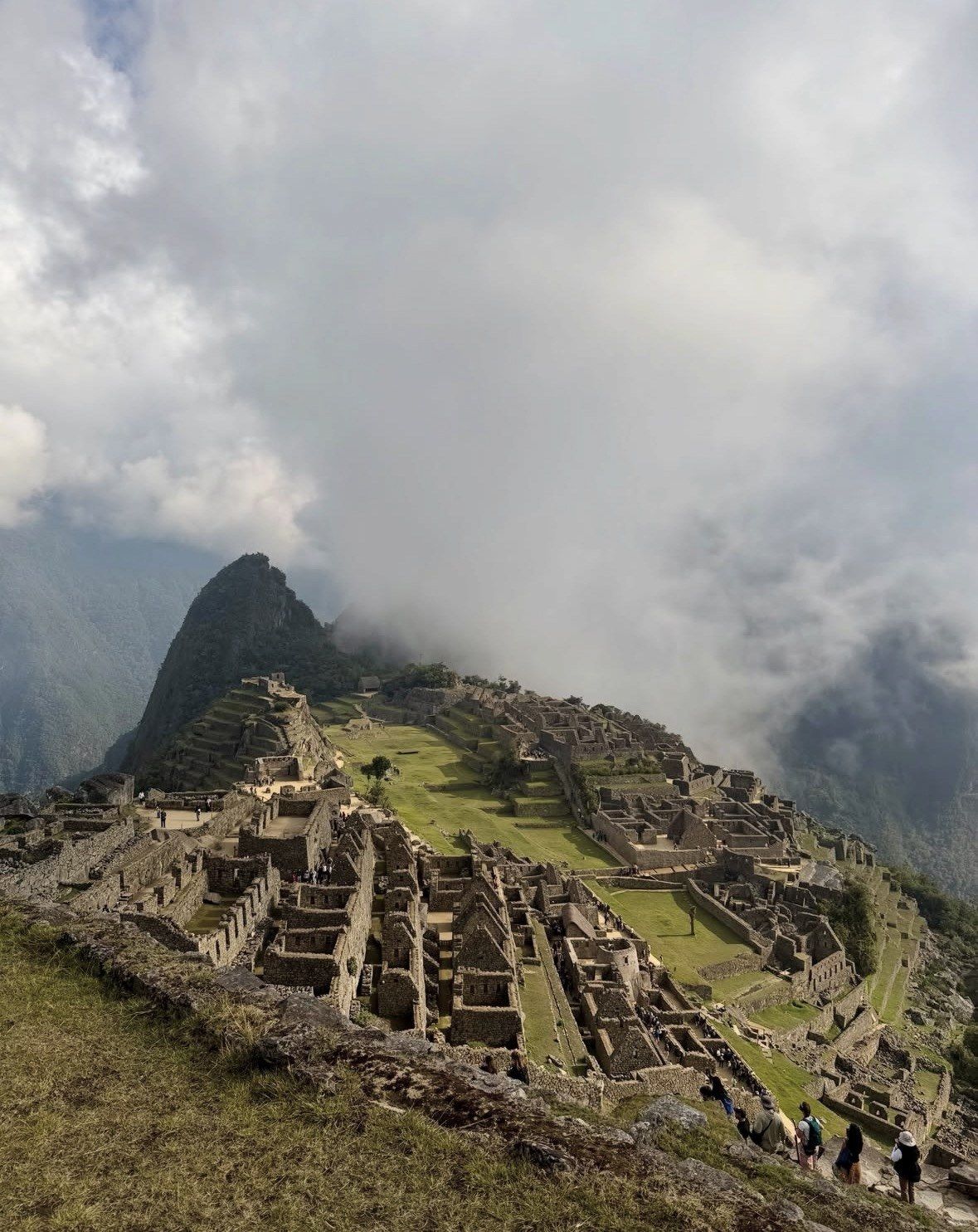
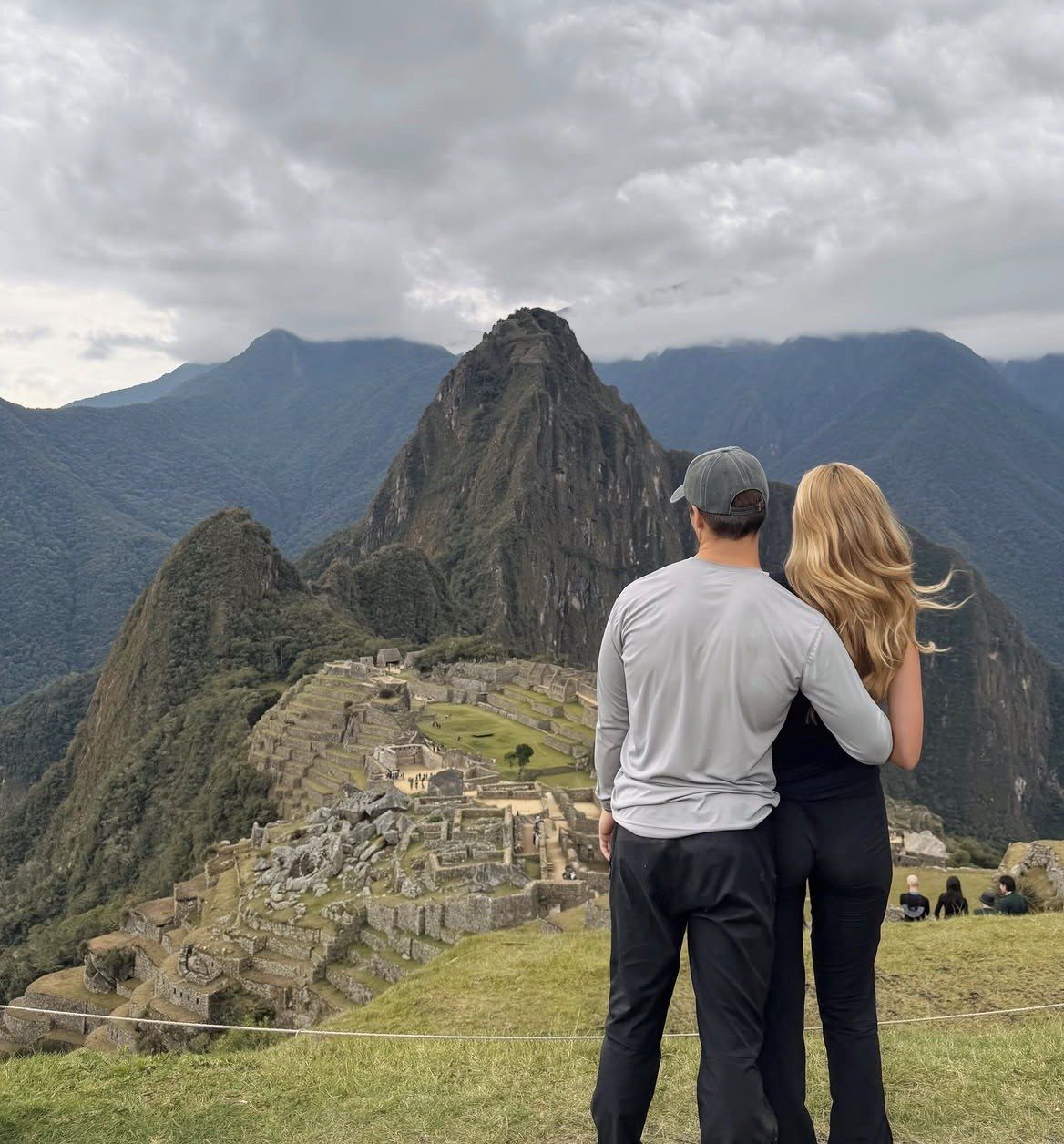
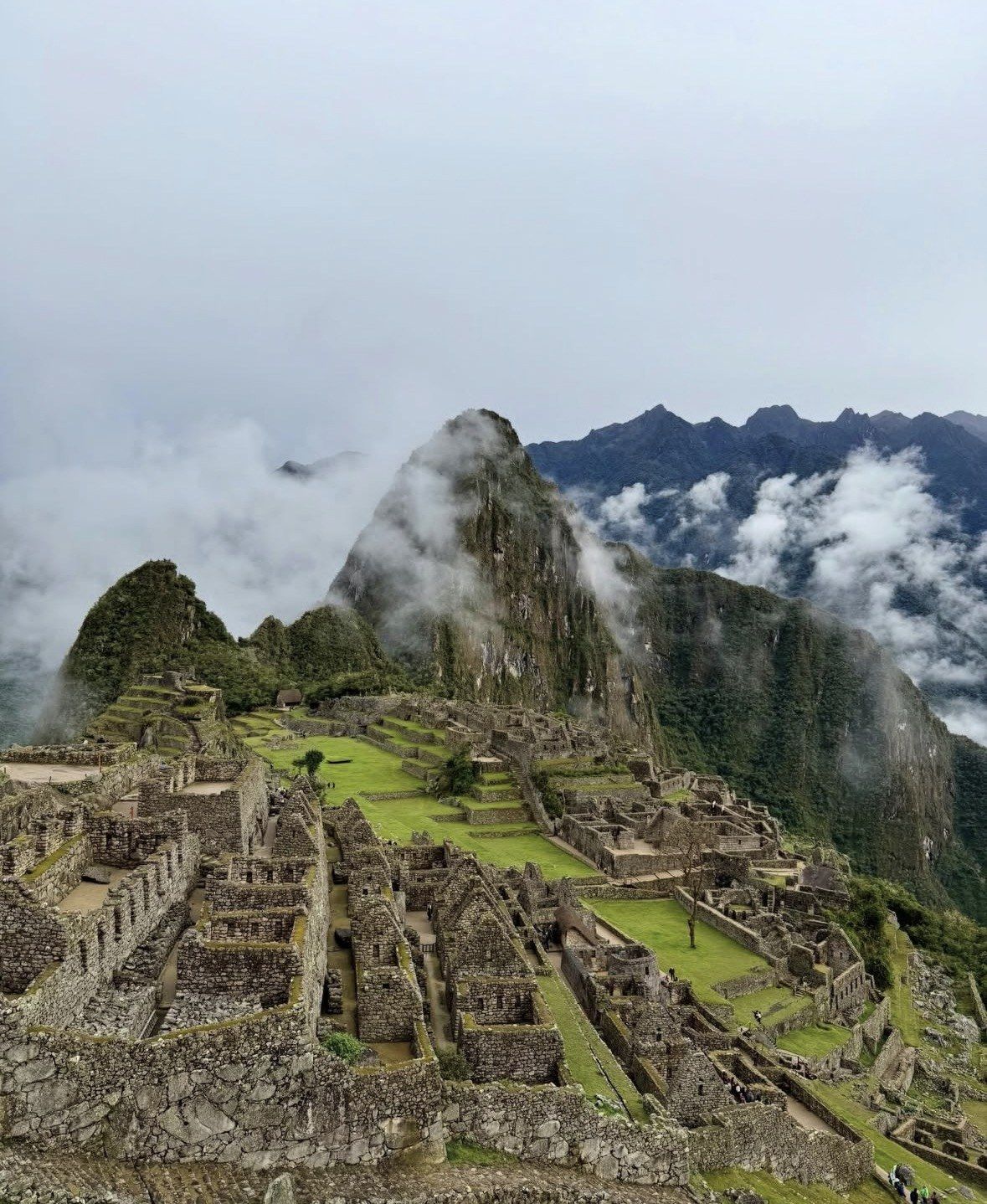
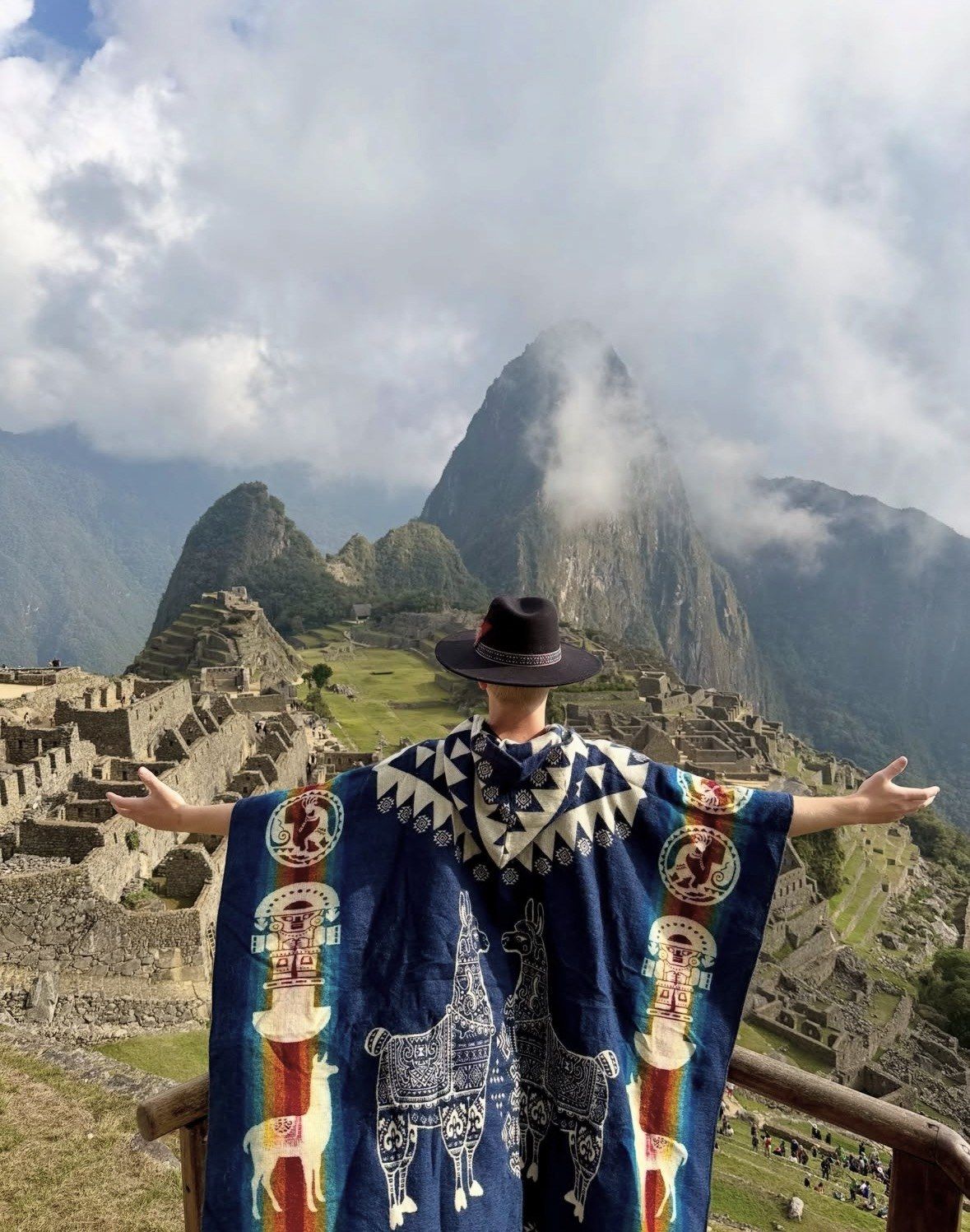
In shortPeru's state news agency puts the Machu Picchu citadel at 2,340 metres above sea level, roughly a kilometre lower than Cusco, which tour operators brief at 3,399 m. The highest ground you actually cross on the way in, by road and then by rail, measures 2,792 m. Thin air is therefore a Cusco problem far more than a citadel problem, and operator briefings quote the ruins at around 2,400 m.
2,340 mCitadel above sea level
3,399 mCusco elevation briefed
2,792 mHigh point on route
2,720 mHuayna Picchu summit
How high each place sits
Peru's state news agency publishes the citadel at 2,340 metres above sea level. Tour operators brief their clients at roughly 2,400 m for the ruins against 3,399 m for Cusco, so the quoted Machu Picchu elevation shifts a little depending on the source. We could not find one official figure to check it against. Use whichever figure your guide gives you on the day. Sixty metres either way makes no difference to your planning: acclimatise for the 3,399 m of Cusco, and expect the citadel, about 1,000 m lower, to feel easier.
The way in has a ceiling of its own. Operators put the high point of the road and rail route at 2,792 m, crossed long before any stonework comes into view. Ollantaytambo, where most trains to the citadel start, sits at 2,360 m according to the rail operator, and Aguas Calientes lies near the valley floor at around 2,000 m.
Read in sequence, those figures describe a descent. You land high in Cusco, climb a bit higher on the road out, then drop to a warm river town and spend your site day in air about a kilometre thicker than the city you slept in the night before.
- Cusco: 3,399 m, the figure operators brief
- High point of the road and rail route: 2,792 m
- Ollantaytambo station: 2,360 m
- Machu Picchu citadel: 2,340 m per Peru's state news agency, around 2,400 m in operator briefings
- Aguas Calientes: around 2,000 m on the valley floor
Snow peaks above 6,000 m, river bottom below 2,000 m
The protected area around the ruins covers 32,592 hectares and is crossed by the Urubamba and Vilcabamba ranges. The altitude range inside those boundaries is wide: snow summits above 6,000 m at the upper end, the warm Urubamba river bed below 2,000 m at the lower one.
The sanctuary therefore holds far more vertical ground than the site itself, and the citadel feels nothing like Cusco despite being in the same region. At 2,340 m the ruins sit in the damp middle band of that gradient, warm and humid rather than cold and dry. Some 340 orchid species have been recorded here, roughly 20% of all orchid species identified in Peru, which tells you what kind of air the ridge has.
Machu Picchu altitude sickness starts in Cusco
Most people who describe Machu Picchu altitude sickness were in trouble before they boarded the train. The citadel is the low part of the itinerary. Cusco at 3,399 m is the high part, and the Lima to Cusco flight takes about 1 hour 15 minutes, so you can go from the coast to thin Andean air inside a morning, with nothing gradual in between.
The risk is not that you will struggle among the terraces. It is that a rough first night in Cusco wrecks the day you have the least flexibility on. Citadel tickets are issued in your name with your ID document number, names and dates cannot be changed afterwards, and an unused ticket loses its validity with no refund or rescheduling except in documented force majeure. Wake up unwell on the morning of your printed entry hour and the ticket is gone.
Treat the Machu Picchu day as the fixed point and arrange the high-altitude parts of the trip around it. Nothing inside the sanctuary, summit routes included, reaches the height of the city where you will be sleeping.
Two days, with a night at valley level
This two-day trip from $449, rated 4.8 ★ (1294 reviews), spends day one in the Sacred Valley and the night in a private room in Aguas Calientes at around 2,000 m, so your site day starts low and early rather than after a 05:20 pickup in thin air.
★ 4.8/5 · 1,294 reviews
How hard are the climbs inside the sanctuary
The optional summits add effort rather than altitude. Huayna Picchu, the peak behind the classic viewpoint and an Inca lookout, reaches 2,720 m, still well under the height of Cusco. Huchuy Picchu, the small third peak used by route 3-D, tops out at 2,497 m and takes about an hour. Machu Picchu Mountain on route 1-A is the long one, roughly 4 hours round trip plus up to 1 hour in the site, and no official height for it was available to us.
Age rules thin the choice before fitness does: routes 1-A, 1-D, 3-C and 3-D admit only visitors over 18. Hours on your feet will tire you faster than the height will, and the reference walk is about 3 hours on Circuit 1, 2 hours 30 minutes on Circuit 2 and 2 hours on Circuit 3, with routes 2-A and 2-B held to a limit of 2 hours 30 minutes once you are through the gate.
Getting up to the gate is its own decision. The footpath from Aguas Calientes means roughly 1,700 steps and 400 m of vertical gain, 1 hour 20 minutes to 1 hour 45 minutes for fit hikers, while the shuttle covers 8 km and about 13 hairpin bends in 20 to 25 minutes for about US$24 round trip at a government-regulated fare. Take the bus up and keep the footpath for the way down if you want it. Buy the round trip at the Consettur booth on Avenida Hermanos Ayar the afternoon before and skip the morning queue.
Take a summit route only if the climb itself is what you came for, and read the calendar before you pay. Routes 1-B, 1-D, 3-A and 3-C stay shut between 16 October and 29 December; on top of that, a 2025 ministerial resolution pulled 3-A for the whole of June 2026 and closed 3-C and 3-D from 19 to 30 June 2026.
| Route | Summit height | Time it takes | Age rule |
|---|
| 3-A Huayna Picchu | 2,720 m | Up to 3 hours on the climb, plus about 1 hour in the site | No age restriction listed |
|---|
| 3-D Huchuy Picchu | 2,497 m | About 1 hour | Over-18s only |
|---|
| 1-A Machu Picchu Mountain | No official height verified | About 4 hours there and back, plus up to 1 hour in the site | Over-18s only |
|---|
| 2-A or 2-B, classic walks | Citadel level, 2,340 m | 2 hours 30 minutes maximum inside the gate | No age restriction listed |
|---|
Where to sleep first, and what to postpone
Spend your first nights lower than Cusco if your flights allow it. The Sacred Valley floor is the obvious place: Ollantaytambo sits at 2,360 m, almost exactly citadel height, and it is also where the trains leave from. Aguas Calientes at around 2,000 m is lower still, and a night there is the only reliable way to hold an early printed entry hour, since the first shuttle leaves at 5:30 a.m.
The valley is not uniformly low, which catches people out. Its archaeological parks stand well above the river: Pisac at about 3,400 m, Moray at about 3,480 m, Chinchero at an average 3,750 m, all of them higher than Cusco city. Walk them gently on an early day or push them later, and use the Sacred Valley page on this site for the ground detail.
Save the genuinely high days for the end, once you have slept several nights in the highlands. Vinicunca's viewpoint reaches 5,200 m after a drive of about three hours from Cusco and an ascent of 90 to 120 minutes, with agency departures reported at 03:00 and a return around 18:00, and the advised window is May to October. The Salkantay crossing peaks at the 4,650 m pass, where April to November are the recommended months and temperatures run from -5 °C to 26 °C. Put neither in your first days, and never the day before a timed citadel ticket. The Cusco page covers what to do in the city while you settle in.
- First nights: Sacred Valley floor or Aguas Calientes, both close to citadel height
- Early days: the citadel, Ollantaytambo and low valley walking
- Middle of the trip: Cusco city at 3,399 m and its high parks
- Last days: Vinicunca at 5,200 m or any trek crossing the 4,650 m Salkantay pass
Practical measures, and when to speak to a doctor
Keep the first day in the highlands short, flat and slow, drink more water than you think you need, and eat lightly. Alcohol is a bad idea while you are adjusting, and it is on the list of items banned inside the citadel in any case. Carry a small day pack only: bags larger than 40 x 35 x 20 cm are refused at the gate, and food and tableware are prohibited inside the site.
Ask your own doctor before you book if you have a heart or lung condition, if you are pregnant, or if altitude has caused you problems before. We give no medication advice here; that conversation belongs with a clinician who knows your history, weeks before departure rather than in a Cusco pharmacy.
Get medical help on the ground if symptoms worsen while you are resting at the same height, or if there is breathlessness at rest, confusion, repeated vomiting or an inability to walk a straight line. Going down is what helps most, and on a Machu Picchu trip down is the direction you were already travelling, from Cusco towards the valley.
Questions people ask
Which is higher, Huayna Picchu or Cusco?
Cusco, comfortably. The peak behind the classic viewpoint reaches 2,720 m, while tour operators brief Cusco at 3,399 m. Climbing Huayna Picchu tests steepness and stamina more than it tests your lungs; route 3-A allows about an hour in the site plus up to three hours of climbing.
Is Aguas Calientes lower than the citadel?
Yes. The town sits near the river floor at around 2,000 m, while the ruins are at 2,340 m. The shuttle road between them covers about 8 km with roughly 13 hairpin bends in 20 to 25 minutes, at about US$24 round trip for foreign visitors on a regulated single-operator fare, and the first departure is at 5:30 a.m.
Can I move my ticket date if altitude keeps me in bed?
No. Entry tickets carry your full name and ID document number, and neither the name nor the date can be changed afterwards. Let the slot pass unused and the ticket simply stops being valid, with nothing refunded and nothing moved to another day unless you can document force majeure. Put your lowest, easiest days first and your 5,200 m excursions last.
How high does the train to Machu Picchu go?
The road and rail route between Cusco and the citadel tops out at 2,792 m according to operator briefings. Trains from Ollantaytambo, at 2,360 m, take roughly 1 hour 30 minutes to 2 hours, while services from Poroy run about 3 hours 30 minutes. Boarding closes 30 minutes before departure.
Should I add Vinicunca to the same trip?
Only at the end of a trip, and only in the right months. The viewpoint reaches 5,200 m, the drive from Cusco to Pitumarca takes about three hours and the walk up takes 90 to 120 minutes, with horses and a muleteer reported at S/70 to S/90 return. Peru's state news agency advises May to October, since snow can block access from November to April.
Read also