Things to Do in Machu Picchu: What Each Route Reaches
Everything inside the citadel sits on one of ten numbered one-way routes, and no single route passes all of it. Here is what each code reaches, how long you get, and which weeks take some of it off the booking screen.
Updated 9 October 2026
In shortThe things to do in Machu Picchu are set by the route printed on your ticket. Routes 2-A and 2-B enter the urban sector with its temples and the classic viewpoint, capped at 2 hours 30 minutes inside. Circuit 1 stays above the buildings. The peaks and side walks sit on 1-A, 3-A, 3-C and 3-D, several of them over-18s only.
10routes across three circuits
2 h 30 mincap inside on 2-A
2,720 mHuayna Picchu, the lookout peak
340orchid species in the sanctuary
Citadel and main entrancePeaks and viewpointsTowns and villages on the routeTicket offices and information points
The citadel, the town of Aguas Calientes below it, the peaks reached by the mountain routes and the Sacred Valley stops on the way from Cusco.
How the circuits cross the ridge
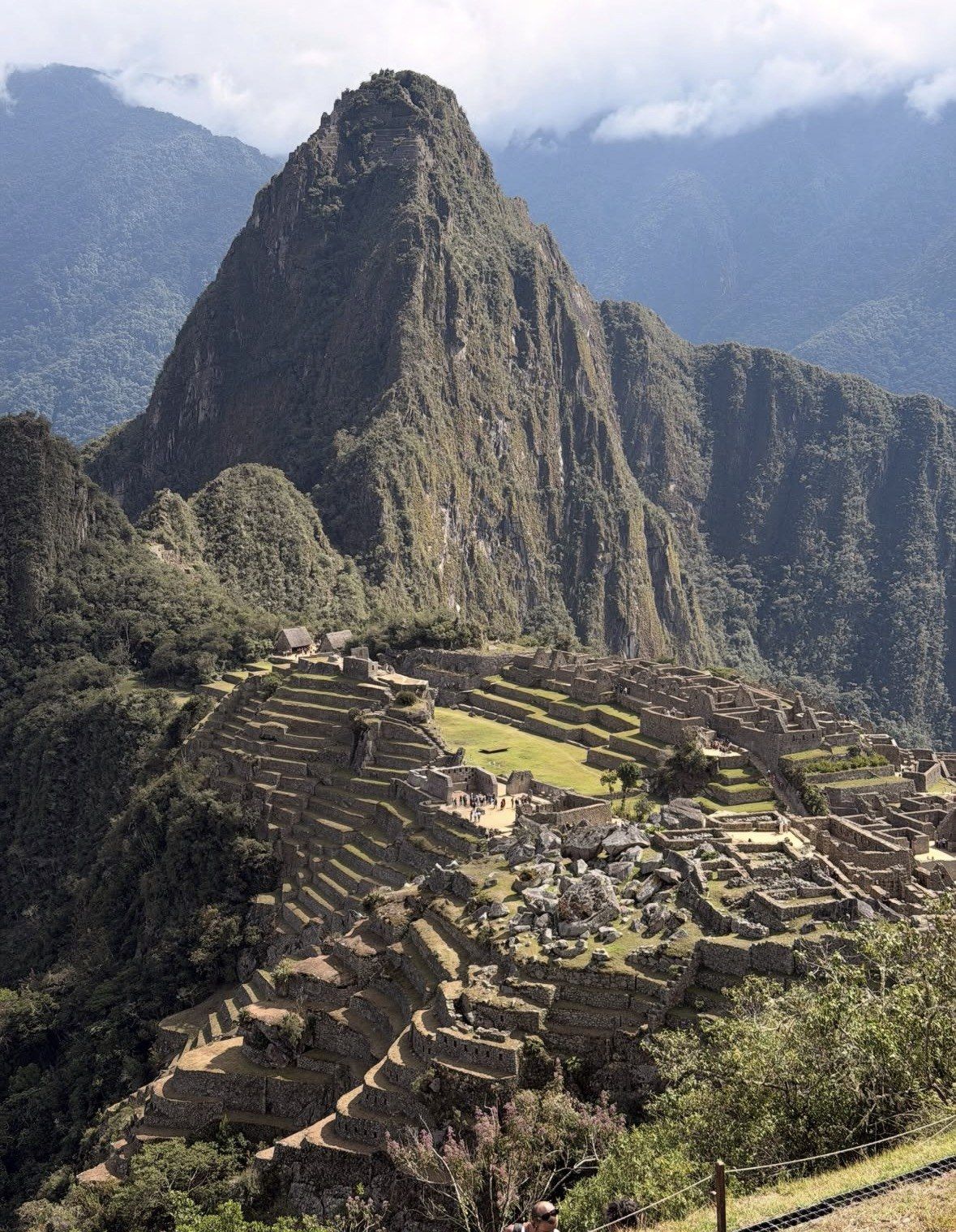
The citadel stands at 2,340 m on a ridge, with Huayna Picchu rising to 2,720 m at the far end of it and the smaller summit of Huchuy Picchu at 2,497 m alongside. Below the walls the sanctuary falls away to the warm Urubamba floor under 2,000 m, while Cusco sits a good kilometre higher at 3,399 m. Inca engineers built the place between two geological faults and gave it an earthquake-resistant design.
Ten numbered routes exist, grouped into three circuits, and each code covers a different band of the ridge: 1-A to 1-D form Circuit 1 Panorámico, 2-A and 2-B form Circuit 2 Clásico, and 3-A to 3-D form Circuit 3 Realeza. The routes work in one direction, so you see what your code passes and nothing more. Reference walking times in the visit regulation are about 3 hours on Circuit 1, 2 hours 30 minutes on Circuit 2 and 2 hours on Circuit 3, and the regulation caps any stay at four hours with no second entry except in documented force majeure.
Use the map on this page to place those three bands on the ridge before you choose a code. Circuit 1 works the high ground and the terracing without going into the built area; Circuit 2 drops in among the walls and takes in the angle used for the postcards, the one with Huayna Picchu standing behind the buildings; Circuit 3, named Realeza, carries the branch routes to the peaks and to the Gran Caverna.
Machu Picchu highlights, route by route
The things to do in Machu Picchu divide by code, and the table is worth reading before you pay rather than after. Time limits are per route, not per visitor, and the long codes leave you about an hour among the buildings.
Route names come from the Ministry's own circuit scheme, but operators publish different levels of detail about which individual structures each walk passes, so read the route description shown at the moment you pay. Picking the code you want on screen reserves nothing for you: the payment has to clear inside 15 minutes, or that place goes back on sale and you are choosing from this table again.
Route
What it reaches
Time it takes
Restrictions
2-A Clásica
Urban sector plus the classic viewpoint; the most complete classic walk
Up to 2 h 30 min inside
No age limit; S/152 general for foreign visitors
2-B
Second classic option through the built area
Up to 2 h 30 min inside
No age limit; S/152 general tier
1-A Machu Picchu Mountain
The long ascent above the site
About 4 h round trip plus up to 1 h in the site
Over-18s only
1-B Upper Terrace
Panoramic route over the terracing, outside the built area
Circuit 1 reference walk about 3 h
Closed 16 October to 29 December
1-C Intipunku
Panoramic route out to the Intipunku gate
Circuit 1 reference walk about 3 h
Sold in high season only
1-D Inca Bridge
Panoramic route to the Inca Bridge
Circuit 1 reference walk about 3 h
Over-18s only; high season only; closed 16 Oct to 29 Dec
3-A Waynapicchu
The 2,720 m lookout peak behind the classic viewpoint
About 1 h in the site plus up to 3 h climbing
S/200 general; suspended all June 2026; closed 16 Oct to 29 Dec
3-B Realeza Diseñada
The route used by everyone arriving on the Inca Trail network
Circuit 3 reference walk about 2 h
Reserved daily quota, booked through authorised agencies
3-C Gran Caverna
The Gran Caverna route
About 1 h plus up to 4 h
Over-18s only; S/200 general; high season only; closed 16 Oct to 29 Dec; out 19 to 30 June 2026
3-D Huchuy Picchu
The third summit, at 2,497 m
About an hour's climb
Over-18s only; S/152 tier; high season only; out 19 to 30 June 2026
Reach the main sectors in one day from Cusco
If you have a single day out of Cusco, this 16-hour trip from $419 covers the train both ways, the shuttle up and down, expert guides and the entry ticket with its circuit subject to availability, which is the practical way to reach the main sectors without handling the route lottery yourself.
The urban sector and the Temple of the Sun at Machu Picchu
Circuit 2 is the only way into the urban sector, and the temples stand there, the Temple of the Sun among them. Circuit 1 never enters the built area at all, which is the one detail worth getting right before you pay. Book 2-A for the fullest classic walk, with up to 2 hours 30 minutes inside covering the urban zone and the viewpoint used for the familiar photograph, and take 2-B if 2-A has gone.
Terracing is what the panoramic circuit is built around: route 1-B carries the Upper Terrace name and keeps to the high ground, and it leaves the booking screen from 16 October to 29 December. For those weeks the panoramic terrace route is simply not on sale, which pushes almost everyone onto the classic codes.
2-A and 2-B share the same ceiling of 2 hours 30 minutes and the same Ministry tariff for foreign visitors, S/152 general, S/77 student and S/70 for minors, with the separate SERNANP sanctuary amount of S/11 for a foreign adult on top. Neither code carries an age restriction, so a family can book the full classic walk together.
The peaks and the side walks, and who can book them
Four codes leave the main walk and each one is a serious time commitment. Code 1-A, Machu Picchu Mountain, asks around 4 hours for the climb up and back down and leaves you up to one hour among the buildings. Waynapicchu on 3-A, the 2,720 m peak the Inca used as a lookout, allows about an hour in the site plus up to three hours of climbing. Gran Caverna on 3-C is about an hour plus up to four. Huchuy Picchu on 3-D, the small summit at 2,497 m, takes roughly an hour to climb.
Age and price move with them. Routes 1-A, 1-D, 3-C and 3-D admit only visitors over 18, so a booking with children means the classic codes or a Circuit 3 route with no age rule. Waynapicchu and Gran Caverna sit on the higher Ministry tariff for foreign visitors, S/200 general against S/152 on the standard circuits, and the Peruvian, resident and Andean Community promotional column reads S/112 on 1-A, 3-A and 3-C against S/64 on the ordinary circuits.
A peak code earns its place when the ascent itself is what you want out of the day. Those codes cut your time among the buildings to roughly an hour, while the viewpoints along the classic walk are where the familiar view of the ridge comes from. The Inca Bridge on 1-D is a panoramic-circuit side walk rather than a summit, still over-18s and still tied to the season.
Dates when routes drop off the booking screen
From 16 October to 29 December four codes come off the menu: 1-B Upper Terrace, 1-D Inca Bridge, 3-A Waynapicchu and 3-C Gran Caverna. That block covers all of November and most of December. A visit in those weeks is a classic or Realeza walk plus Machu Picchu Mountain on 1-A, which the closure list does not touch.
Peru's state news agency lists four routes as going on sale in high season only: 1-C Intipunku, 1-D Inca Bridge, 3-C Gran Caverna and 3-D Huchuy Picchu. The rail operator's version of the same list names 1-C, 3-C and 3-D, so check live availability for your exact date instead of trusting either list. High season in 2026 means 1 January, 2 to 5 April, 19 June to 2 November, and 30 and 31 December, with 5,600 places a day against 4,500 on all other dates.
Maintenance suspensions come on top of the seasonal pattern: RM N° 000317-2025-MC pulled Waynapicchu for the whole of June 2026 and took 3-C and 3-D out from 19 to 30 June 2026 for conservation work. The code on your ticket changes nothing about how the gate treats you: you walk in at the exact hour printed on it, inside the band you paid for, morning 06:00 to 12:00, afternoon 12:00 to 18:00 or full day 06:00 to 18:00, and arriving more than 30 minutes late in low season or 45 minutes in high season means you are turned away.
Closed 16 October to 29 December: 1-B, 1-D, 3-A, 3-C
High season only, per the state news agency: 1-C, 1-D, 3-C, 3-D
Out for conservation work in June 2026: 3-A for the whole month, 3-C and 3-D between 19 and 30 June
Over-18s only, all year: 1-A, 1-D, 3-C, 3-D
Never reaches the urban sector: all of Circuit 1
Orchids and cloud forest inside the sanctuary
The stonework sits inside a protected natural area of 32,592 hectares, created on 8 January 1981 by Supreme Decree 001-81-AA and 45 years old in January 2026. The Urubamba and Vilcabamba ranges cross it, and the ground inside it runs from snow peaks above 6,000 m down to the warm river bottom below 2,000 m, which is why the same reserve holds several climates at once.
About 340 orchid species have been recorded here, roughly 20% of all the orchid species identified in Peru, and the damp middle band where the citadel stands is where most of that diversity sits. The code you book decides how much of that forest you walk through: Gran Caverna and Machu Picchu Mountain put you in it for hours, while a 2 hour 30 minute classic walk keeps you largely on worked stone.
Decide which single thing you would regret missing, then book the code that reaches it: 2-A for the urban sector, its temples and the classic viewpoint; 1-B or 1-C for the panoramic ground when the calendar allows it; 1-A, 3-A, 3-C or 3-D when climbing is the point. If you would rather have the entrance, the train and a guide arranged in one go, three tours on this site cover the main sectors. The Machu Picchu Tour Full Day by Train is 16 hours from $419, rated 5.0 ★ (321 reviews), with the entrance and circuit allocated subject to availability and five months of lead time advised. For the same sectors spread over two days, the 2-Day Sacred Valley & Machu Picchu Tour from Cusco by Train gives Circuit 2 priority allocation subject to Ministry availability and a night in Aguas Calientes, 2 days from $449, rated 4.8 ★ (1294 reviews). If you want the urban sector explained as you walk it, the Machu Picchu Private Full-Day Tour from Cusco with All-Inclusive pairs Circuit 2 entry subject to availability with two hours of private guiding inside the walls, 12 to 16 hours from $339, rated 4.9 ★ (150 reviews).
Questions people ask
Can I walk a route in reverse or go back for a second look?
No. The routes run in one direction, the maximum stay inside is four hours, and re-entry is not allowed except in documented force majeure. Break the visit regulation and staff take you out of the site there and then, with the money paid for the ticket lost.
Can children do the peaks and side walks?
Not on 1-A, 1-D, 3-C or 3-D, which are restricted to visitors over 18. Children aged 3 to 17 can do the classic walk with an adult accompanying them, at the minor tariff of S/70 on the standard circuits for foreign visitors, and under-3s go through without a ticket. At the gate each person shows the document their ticket was issued against: a DNI, carné de extranjería or passport.
Do I need a guide to find the main sectors?
The Ministry of Culture states that a guide is recommended rather than compulsory. Walking with one brings its own set of rules: sixteen visitors maximum in a group, a valid guide card on show, a flag or banner once the group reaches five people, and the guide alongside the group for the whole route. You cannot be moved into another group or added to one once you are inside.
What can I carry while walking the circuits?
Take a day pack that measures under 40 x 35 x 20 cm, since anything larger stays outside. The banned list covers food and tableware, umbrellas and parasols, walking poles or canes tipped with metal or anything hard, portable seats and prams, though a baby carrier with no metal frame goes through. Footwear must be soft or rubber-soled, and smoking, vaping and any kind of fire are prohibited.
Is the Inca Bridge included with a standard circuit ticket?
No, it has its own code: route 1-D on the panoramic circuit, restricted to visitors over 18. It is one of the routes shut from 16 October to 29 December, and Peru's state news agency lists it among those sold in high season only. Book that specific code if the bridge is your priority.
The private full-day tour from Cusco lists Circuit 2 entry subject to availability and a private two-hour guided visit inside the citadel, which is the part of the day that decides what you actually see.