In shortMachu Picchu was built by the Inca, and
Yale's exhibition curators attribute it to the ruler Pachacuti in 1450 as a royal estate. Research by Burger and Salazar found the site active for less than a hundred years, contradicting Bingham's claim of centuries. Hiram Bingham III reached it in 1911; UNESCO inscribed it on 9 December 1983.
1450Royal estate under Pachacuti
1911Bingham reaches the site
9 Dec 1983UNESCO World Heritage listing
32,592 haSanctuary protected since 1981
Who built Machu Picchu, and under which Inca ruler
The builders were the Inca, working for the state rather than for a private patron, and the ruler the site is attributed to is Pachacuti. Yale's exhibition curators, assessing the material the ridge produced, read the place as a royal estate raised for him, and they date that building work to 1450. No inscription carries the date. It rests on the objects, and it stands behind every answer to who built Machu Picchu that you will read.
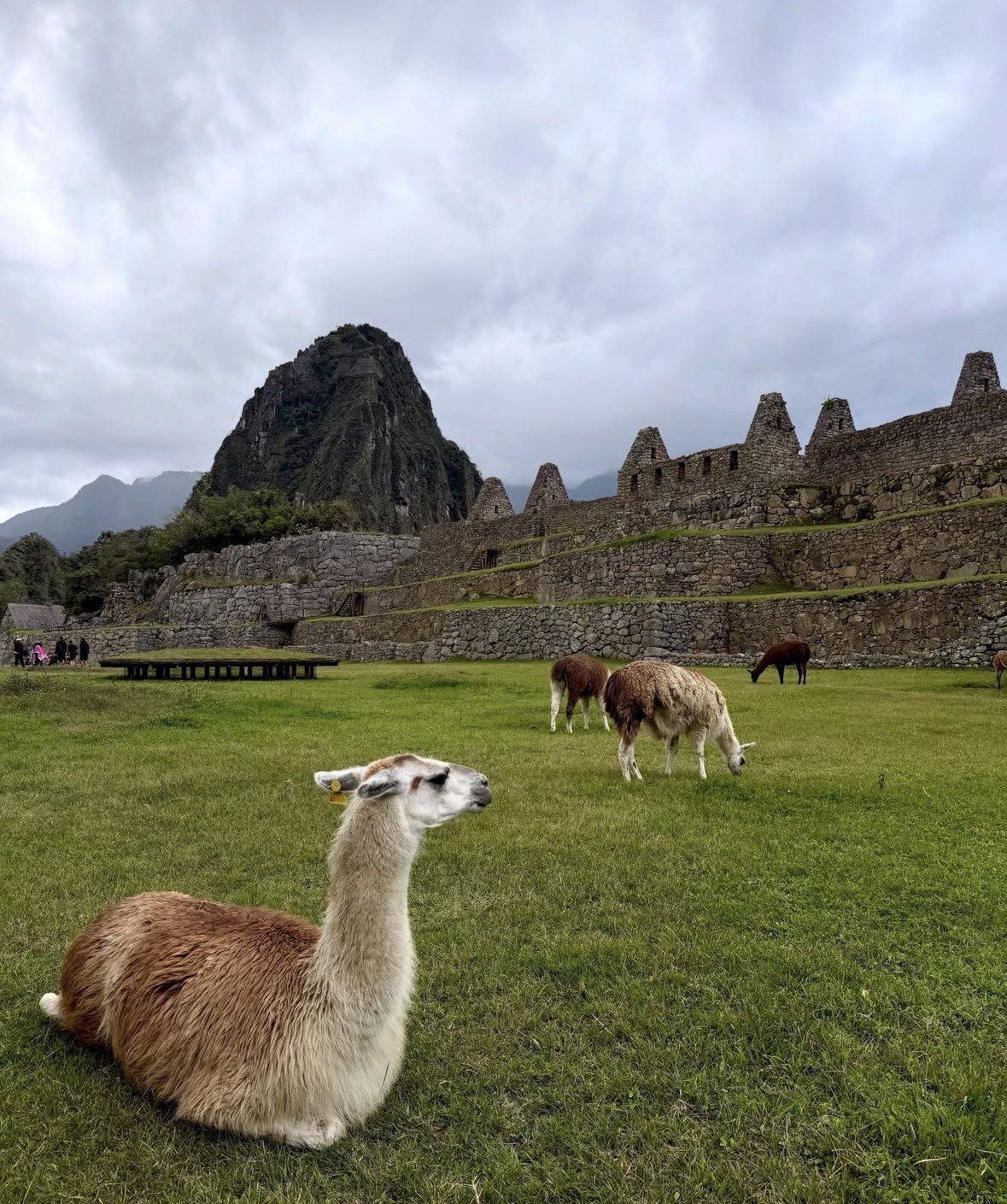
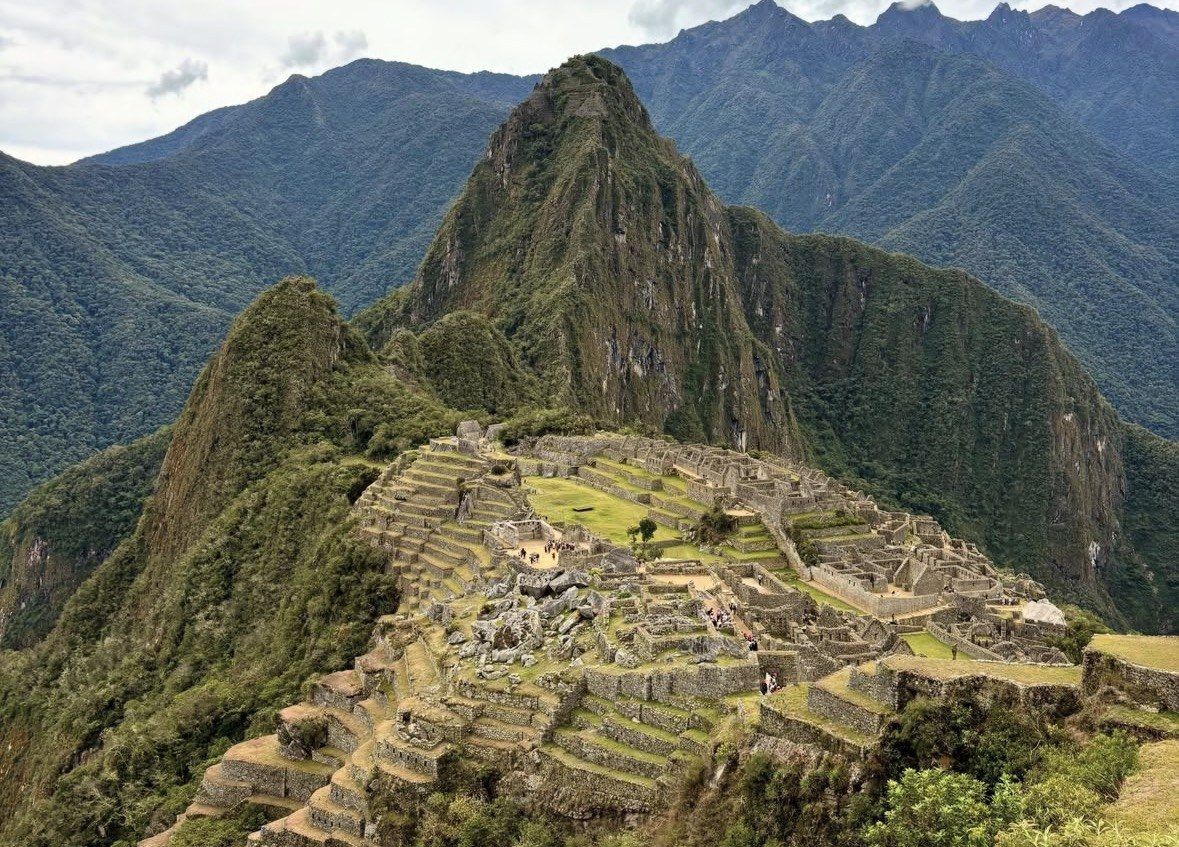
The engineering supports that reading. The citadel stands at 2,340 metres above sea level, laid out between two geological faults, and Peru's state news agency notes that Inca engineers and architects gave it an earthquake-resistant design. Behind the classic viewpoint rises Huayna Picchu at 2,720 metres, which the Inca used as a lookout. A ridge gets chosen for what can be watched from it, and for what the rock underneath will hold, and both decisions are visible from the terraces.
One ruler's name rarely covers a whole Inca site. At Saqsaywaman above Cusco, work began under Pachakuteq and continued under Topa Inka Yupanqui, Huayna Qhapaq and Huáscar Inka. A founding reign is where the chronology starts.
How old is Machu Picchu and how long it was used
The date to hold on to is 1450. That puts construction in the middle of the fifteenth century, inside the reign Peruvian chroniclers associate with Pachacútec, when Inca building across the Cusco region was at its most ambitious. The terraces and gates you pass in the Sacred Valley on the way in belong to the same construction horizon.
The occupation was short. Research by Burger and Salazar found the site active for less than a hundred years, against Bingham's reading of centuries of settlement on the ridge. Everything you walk past was built, used and left within a few generations.
The table below lists the dated milestones; the rest of the chronology is inference.
| Date | What happened |
|---|
| 1450 | Royal estate built under the Inca ruler Pachacuti, according to Yale's exhibition curators |
|---|
| 1911 | Hiram Bingham III, a Yale professor and archaeologist, reaches the site and it enters international attention |
|---|
| 8 January 1981 | Supreme Decree 001-81-AA creates the Historic Sanctuary over 32,592 hectares as a protected natural area |
|---|
| 9 December 1983 | Inscribed on the UNESCO World Heritage List under criteria I, III and VII |
|---|
| 2003 | Yale Peabody exhibition displays over 400 gold, silver, ceramic, bone and textile artefacts from Bingham's expeditions |
|---|
| January 2026 | The sanctuary marks its 45th anniversary as a protected area |
|---|
What the site was for, and why it was left
Yale presents the prevailing reading as a summer retreat for the Inca elite of Cuzco, a place the court travelled to while Cusco stayed the capital. Curator Richard Burger described the function as the Inca equivalent of a presidential retreat. That displaces the older picture of a spiritual centre standing on its own, and it sits more comfortably with an occupation of under a hundred years than with a long one.
None of this is closed. The function is inferred from the architecture and from the objects recovered, and each of the main readings accounts for part of the evidence:
Why the ridge was left is the weakest link in the chain. What is documented is the length of use: under a century on Burger and Salazar's dating, so the end came within a few generations of the building work. The record available here assigns no cause, and a confident single explanation goes past the evidence. People in the valley knew the ridge all along; 1911 changed who outside the region knew about it, and the material taken out then is what later researchers dated.
- Royal estate: built for Pachacuti and dated to 1450 by Yale's exhibition curators
- Summer retreat for the Inca elite of Cuzco: the prevailing reading Yale presents, likened by Richard Burger to a presidential retreat
- Isolated spiritual centre: the older popular interpretation, which Yale's reading sets aside rather than confirms
- Centuries of continuous occupation: Bingham's view, contradicted by Burger and Salazar's finding of less than a hundred years
The 1911 expedition and the objects that left the ridge
Hiram Bingham III, a Yale professor and archaeologist, rediscovered Machu Picchu in 1911, as Yale puts it. What he brought into the international record was the ridge itself; the reading he attached to it, a site occupied for centuries, is the part later research took apart.
His expeditions removed a great deal of material from the ridge. More than 400 pieces in gold, silver, ceramic, bone and textile recovered by those expeditions went on show at the Yale Peabody Museum in 2003, and the curators of that exhibition set out both the 1450 date and the royal estate reading. Those artefacts are the reason the chronology could be tightened at all, because no colonial document records the founding of the site.
Colonial written sources are thinner than visitors expect, and they disagree with each other. At Ollantaytambo, down the valley on the route most people now travel, Sarmiento de Gamboa credits Pachacútec, who ruled from 1438 to 1471, as the builder, while Garcilaso de la Vega credits Wiracocha. Weigh any chronicle attribution against the archaeology before you repeat it.
Protected area status and heritage recognition
Peru protected the surroundings before the world body acted. The instrument was Supreme Decree 001-81-AA, dated 8 January 1981, which classified 32,592 hectares as a conservation unit in the Historic Sanctuary category, declared the land intangible and limited what could be done with it to the decree's own standard of rational use. That protection turned 45 in January 2026.
The Urubamba and Vilcabamba ranges cross the sanctuary, and inside its boundaries the ground drops from snow peaks above 6,000 metres to the warm Urubamba river bottom below 2,000 metres. Orchids give the clearest measure of what that boundary holds, with about 340 species recorded and roughly 20% of every orchid species identified in Peru present inside it. The ruins stand inside a nature reserve, and the two are run as a single protected unit, which is why the rules on what you may carry through the gate are as tight as they are.
World Heritage listing followed on 9 December 1983, under criteria I, III and VII. Criterion I recognises the place as a masterpiece of Inca art, urbanism, architecture and engineering, which is the formal wording for what the stonework shows on the ground. A worldwide ballot that drew more than 100 million votes named Machu Picchu one of the New Seven Wonders of the World.
Private full day with a two-hour guided visit
If you want the dating and the arguments explained in front of the actual walls at your own pace, this private full-day tour from Cusco includes a two-hour private guided visit inside the citadel with Circuit 2 entry subject to availability, from $339, rated 4.9 ★ (150 reviews).
★ 4.9/5 · 150 reviews
Reading this history on the ground
Dates and theories start to matter once you are inside the walls, and the walls do not explain themselves. Visits run on three circuits subdivided into ten routes, and the route on your ticket decides which buildings you stand in front of. Routes 2-A and 2-B are capped at 2 hours 30 minutes inside the site, and 2-A is the most complete classic option. The page on the circuits sets out which route reaches what.
Peru's Ministry of Culture recommends a tourist guide for the citadel without making one compulsory. The visit regulation then shapes how a guided visit runs: groups inside the site are capped at sixteen visitors, the guide stays with the group from entry to exit, must display a valid guide card, and must carry a flag or banner once there are five visitors or more. Once you are inside, you cannot be moved to another group or added to one.
The guided tours listed on this site cover this background on the spot, in front of the masonry it refers to. The page comparing the guided options sets out what each format includes and how long the day runs door to door, from the Cusco pickup onwards.
Questions people ask
Did the Inca leave written records of who built Machu Picchu?
No written Inca record names the builders, so the attribution rests on archaeology and on colonial chronicles written after the conquest. Those chronicles conflict: for Ollantaytambo, Sarmiento de Gamboa credits Pachacútec, who ruled from 1438 to 1471, while Garcilaso de la Vega credits Wiracocha. For Machu Picchu itself the 1450 date and the Pachacuti attribution come from Yale's exhibition curators working on the recovered material.
Where are the artefacts Bingham's expeditions took from the site?
More than 400 objects in gold, silver, ceramic, bone and textile recovered by his expeditions were exhibited at the Yale Peabody Museum in 2003. That exhibition is also where the royal estate interpretation and the 1450 date were set out for a general audience. The current dating of the occupation rests on those objects.
Does the World Heritage listing cover the landscape as well as the ruins?
The inscription of 9 December 1983 was granted under criteria I, III and VII, and criterion VII sits alongside the cultural criteria. On the Peruvian side, the 1981 Supreme Decree protects 32,592 hectares as a Historic Sanctuary, crossed by the Urubamba and Vilcabamba ranges and dropping from snow peaks above 6,000 metres to river bottom below 2,000 metres. About 340 orchid species have been recorded inside it, roughly 20% of Peru's total, so the designation covers far more ground than the terraces.
How much time inside the citadel do you need for the main structures?
Reference walking times are about 3 hours for Circuit 1, 2 hours 30 minutes for Circuit 2 and 2 hours for Circuit 3, and Andina puts Circuit 2 at between two and a half and three hours. Routes 2-A and 2-B are capped at 2 hours 30 minutes inside the site. Check the route when you buy.
Is a guide required to visit, or just recommended?
The Ministry of Culture recommends a tourist guide for the citadel without requiring one. The visit regulation does set the terms once you take a guide: a maximum of sixteen visitors per group, the guide present with the group throughout, a visible guide card, and a flag or banner once there are five or more visitors. Groups cannot be enlarged or merged once inside.
Read also